
Consider Valentine’s Day as merely roses and chocolates? The reality is quite different. Explore the Valentine’s Day traditions worldwide. Diverse cultures commemorate love in unexpected manners.
Valentine’s Day is observed from the snowy paths of Scandinavia to the sun-kissed shores of Brazil. As February 14 approaches, many of us feel familiar with the routine: red roses, heart-shaped candies, intimate dinners by candlelight, and maybe a corny card. However, what if I inform you that in certain regions, Valentine’s Day entails the abduction of potential partners, wooden spoons artistically inscribed with romantic messages, or women pursuing men down the streets wielding whips? Indeed! Various cultures across the planet boast their own distinct and moving practices that transform February 14 – or its cultural counterpart – into an unforgettable experience.
Buckle up, romance enthusiasts, because we’re about to take a whirlwind tour of the most fascinating, bizarre, and utterly enchanting Valentine’s traditions from around the world. These traditions will enhance your understanding of different cultures and may even motivate you to incorporate some global influence into your own romantic festivities.
Japan: Chocolate Categories and Romantic Hierarchies
In Japan, Valentine’s Day traditions take a beautifully structured turn. On the 14th of February, it is customary for women to present chocolates to men. However, these chocolates are not all the same. Japan has developed what may be the most intricate chocolate gifting system worldwide, where various kinds of chocolate express distinctly different sentiments:
- Giri-choco (Obligation chocolate): Inexpensive chocolate given to male friends, colleagues, and supervisors
- Honmei-choco (True feeling chocolate): Costlier, often handcrafted, meant for boyfriends or husbands.
- Tomo-choco (Friend chocolate): Shared among female friends
- Jibun-choco (Self chocolate): Premium chocolate that women purchase for themselves.
This system has birthed a vast industry valued in billions of yen, with department stores allocating entire levels to showcase Valentine’s chocolate exhibits. The societal pressure is so great that many women spend weeks deliberating on their chocolate selections.
What is particularly endearing about Japan is that men do not return the favor on Valentine’s Day. Instead, they express their love and gratitude a month later, on March 14th, which is celebrated as White Day. On this day, men present gifts such as white chocolates, marshmallows, jewelry, or even romantic dinners to their loved ones.
This two-stage celebration keeps the love buzz going for an entire month! It’s no wonder Japanese Valentine’s Day rituals capture global imagination.
South Korea: Triple the Romance, Triple the Pressure
South Koreans have expanded Valentine’s Day into a trilogy of romantic occasions, resulting in a love-themed calendar that could wear out the most devoted partner.
- February 14th: Women present chocolates to men.

- March 14th (White Day): Men reciprocate with treats or gifts valued at three times the worth of what they received.
- April 14th (Black Day): Singles who went unacknowledged on Valentine’s or White Day come together, sharing jajangmyeon (black noodles) while lamenting their unattached status.

Rather than viewing Black Day as a time of sadness, many regard it as a reminder that true love will ultimately arrive. The cheerful celebration of being single has turned into a cherished cultural practice.
This framework has fostered an entire economy centered on exchanging romantic gifts, with couples occasionally investing months in planning their intricate presentations. What a thrilling approach to romance!
Denmark: Poetic Valentines
In Denmark, Valentine’s Day incorporates a literary flair. Love is expressed in written form. Rather than using pre-made cards, individuals share gaekkebrev, also known as “joking letters”, which are rhyming poems crafted from beautifully designed paper.

What makes it interesting? The person who sends it does not reveal their identity, signing only with dots that correspond to the initials of their name.
If the person who receives it can identify the sender, romance flourishes, and they owe an Easter egg to the sender when spring arrives. If they cannot figure it out, it simply adds to the enjoyment. Moreover, instead of traditional roses, couples in Denmark frequently gift one another snowdrops, fragile white blooms that emerge through the winter chill, symbolizing love’s emergence against challenges, and representing hope as well as new beginnings.
France: Epicenter of Romance

France doesn’t shout romance – it whispers it. It conveys romance subtly rather than through loud declarations. It is frequently regarded as the origin of the Valentine’s card, with the Duke of Orléans allegedly sending the first one in 1415. However, Paris is not the sole location where February 14th stirs emotions.
Renowned for its romantic dinners and gifts, France has a village named “St. Valentin” that becomes a center of romance from February 12th to 14th. Named after the patron saint of lovers, the entire town converts into a living love letter, candlelit dinners, concerts, poetry readings and even romantic getaways for couples. Homes are adorned with roses, and the “Jardin des Amoureux” (Garden of Lovers) serves as a popular spot for marriage proposals and renewing vows.
Once upon a time, France even had a tradition called “loterie d’amour” where single men and women paired off randomly. It didn’t last – but the idea that love is fate – driven still lingers.
Philippines: Mass Weddings of Love
Envision a Valentine’s Day event where countless pairs come together to either tie the knot or reaffirm their commitment in one grand gathering! This is precisely the case in the Philippines, especially in metropolitan areas such as Manila and Zamboanga. Such occasions are frequently free of charge or significantly subsidized, thus enabling couples who may not have the means for a wedding to partake.

Each year on the 14th of February, a multitude of couples participates in mass weddings sponsored by the government. Certain ceremonies have featured more than 1,000 couples simultaneously exchanging vows, resulting in an impressive display that merges romance with practicality. Just think of the challenge in locating one’s partner in the wedding photographs!
Brazil: Dia dos Namorados
Brazil observes its own version of Valentine’s Day on the 12th of June, referred to as “Dia dos Namorados” (Day of Lovers). This occasion was selected to pay tribute to Saint Anthony, the patron saint of marriage in Portugal. The festivities align with Festa Junina, resulting in a delightful blend of romance and traditional folk celebrations.
Instead of Valentine’s chocolates and roses, Brazilian lovers exchange carnations, handmade gifts, romantic dinners and music–filled nights. Brazilian couples participate in traditional quadrille dancing, share pamonha (corn-based delicacies), and make wishes at Saint Anthony altars.

There’s even an element of matchmaking. Saint Anthony is believed to bless relationships and assist singles in finding their ideal partner. Single women perform rituals involving placing a statue of Saint Anthony upside down until he helps them find love. In a country known for vibrant festivals and joy-filled celebrations, Dia dos Namorados is a heartfelt homage to love in winter.
Wales: The Art of Love Carved in Wood
The Welsh celebrate love on January 25th, honoring St. Dwynwen, the Welsh patron saint of lovers. In Wales, forgo the idea of purchasing mass-produced items; genuine romance calls for skillful crafting. Traditionally, men in Wales would carve detailed “love spoons” from a single block of wood, with each carving representing a significant romantic sentiment. This practice has centuries of history and embodies the concept that love requires time, attention, and artistry, much like skilled craftsmanship. The more intricate the carving (hearts, keys, crosses, horseshoes), the deeper the intended meaning.

Love spoons aren’t used to eat – they’re keepsakes symbolizing love and commitment. Hearts denote affection, keys represent safety, caged balls express aspirations for offspring, knots signify everlasting bonds, and wheels shows how hard he would work for his beloved.
But here’s the kicker: these weren’t just pretty decorations. If a woman accepted and showcased the love spoon, it effectively served as a public declaration of their romantic connection. Consider the immense pressure to perfect those intricate wooden designs when your entire romantic prospects hinged on your woodworking abilities!
Italy: Where Padlocks Symbolize Eternal Love
Italy excels in commemorating affection – through a mixture of ardor, verse, and delightful treats. On Valentine’s Day (La Festa degli Innamorati), couples in Italy highlight la dolce vita (the sweet life).
All over Italy, partners partake in:
- Enchanting dinners featuring chocolate and strawberries
- Music performances and serenades under balconies
- Personalized notes and poetry sessions
- Exchanging gifts, chocolates, particularly jewelry
In Verona, the backdrop for Shakespeare’s Romeo and Juliet, Valentine’s festivities take on enchanting dimensions. Lovers leave letters at Juliet’s balcony, visit her tomb, and promise undying love to one another.

In Italy, especially in Rome, partners initiated a custom of fastening “love padlocks” to bridges, gates, and historical sites before tossing away the key as a symbol of their unbreakable connection. The Ponte Milvio Bridge became so heavy with thousands of padlocks that sections began to collapse!

Although officials have since removed many love locks for safety concerns, the tradition has spread worldwide, motivating similar exhibits on bridges from Paris to New York. This romantic act became so widespread that it effectively altered the structural integrity of historic landmarks – now that is love with impact!
Italian romance thrives on grand gestures and poetic expressions, where love is not rushed but savored like fine wine.
Estonia: Two Weeks of Romantic Revelry
In Estonia, Valentine’s Day isn’t a one–day event – it’s a two–week celebration called “The Week of Love”. This celebration kicks off on February 14th and concludes with Friendship Day on February 27th, honoring both romantic relationships and friendships. The focus shifts from dimly lit dinners to celebrating all significant individuals in one’s life. The event, known as Sõbrapäev (Friendship Day), welcomes everyone, including neighbors and children. People exchange cards and small gifts to show appreciation for their platonic bonds.
Estonians celebrate love in its various forms through community gatherings, concerts, and poetry nights, as well as gift exchanges among friends and couples and public displays of love.
This extended observance signifies a cultural belief that deserves more than just a single day, emphasizing the deep link between friendship and romance.
Ghana: National Chocolate Day

As one of the leading nations in cocoa production globally, Ghana observes National Chocolate Day on February 14th, honoring both affection and its rich cocoa legacy. Rather than buying costly chocolates from abroad, Ghanaians indulge in locally made cocoa delights, bolstering their economy while expressing love.

The festivities feature chocolate-themed festivals, cocoa farm tours for couples, and informative sessions about chocolate production. It’s a brilliant example of adapting a global tradition to support local culture and economy, sweet in more ways than one!
Partners also share cards, bouquets, and presents, yet the focus resides on Ghanaian chocolate, emphasizing that both love and cocoa can hold sentimental value while being delightful.
Argentina: A Week of Sweetness
In Argentina, love extends beyond just a single day. Valentine’s Day on February 14, is celebrated similarly to various other locations, and some partners begin a delightful preparation as early as February 7. Throughout this period, individuals exchange chocolates and candies, include brief messages, and accompany each sweet item with a small display of affection. The week peaks with Valentine’s Day, enhancing the excitement leading to the special day. It’s a celebration that reminds us: love is best savored slowly.
But the best–known twist comes in July. Argentina has its own Semana de la Dulzura (Sweetness Week), when sweets are traded for kisses, hugs and other signs of affection. It started as a candy marketing campaign by a confectionery company but evolved into a widely beloved cultural week dedicated to affection people genuinely enjoy.
Taken together, it feels less like a single holiday and more like a slow, sweet season of love.
South Africa: Wearing Your Heart on Your Sleeve
In South Africa, Valentine’s Day comes with the usual flowers, chocolates, and cards, but many people put extra value on hand–made gifts. Couples, and even friends, often swap love letters, hand–made bracelets, poems, and small tokens of love.
A particularly touching aspect of South African Valentine’s culture is the community spirit. Schools may hold simple projects where kids make cards for family members, so the day feels like a shared celebration, not just a couple’s holiday.
There’s also a well–known local tradition tied to ancient Roman Lupercalia. Some South African women pin the name of a crush or love interest to their shirt sleeve. It turns “wearing your heart on your sleeve” into something real, and it lets a secret Valentine know how they feel.
Slovenia: The Day Birds Propose
In Slovenia, Valentine’s Day is also known as the day when “birds propose”. It is literally believed that birds find their mates on February 14th. Slovenians traditionally take walks in fields and vineyards to witness this natural courtship ritual.
In Slovenia, Valentine’s Day (known as Valentinovo) blends traditional romance with artisan creativity. Couples exchange:
- Valentinček: small hearts or poetic messages tucked into books, desks, or lunch boxes.
- Homemade sweet gifts shaped like hearts.
- Romantic dinners and strolls through historic city streets.
The country also has one of the most romantic marriage proposal traditions. Men often propose in the stunning underground caves of Postojna, where the acoustics create an ethereal echo of their words. Some couples even get married in these caves, surrounded by ancient stalactites and stalagmites.

The Slovenian tradition is centered on tender affection, creativity, and thoughtful, personal touches.
Finland: FriendZone First
In Finland, like neighboring Estonia, the focus isn’t strictly on couples. Valentine’s Day celebrates all relationships, including friendships.
Called Ystävänpäivä (“Friend’s Day”), February 14th is is the second most popular card–sending holiday in the country, emphasizing that love isn’t just for couples. It is a chance to give small gifts, cards and messages to friends, classmates, family members and colleagues, host small gatherings or bake sweet treats and express appreciation for important connections.
For Finns, love is broader than romance – it’s about bonds that support and uplift us.
Mexico: Día del Amor y la Amistad
In Mexico, Valentine’s Day is known as Día del Amor y la Amistad, or the Day of Love and Friendship, expanding the celebration beyond romantic couples to include all types of relationships. It’s not just about couples. Friends trade gifts, families plan special dinners, and the whole community joins in to celebrate love in all its forms.
The fun often starts early. Many places kick things off on the first Friday of February, then 
As the days lead up to February 14, streets fill with music and flowers. Food plays a big part too, including special Valentine’s dishes like mole served in heart shapes. Overall, the tradition blends family, music, and community, with a clear message, love is meant to be shared.
Romania: Where Dracula’s Homeland Celebrates Love
Romania, particularly in Brasov (near Dracula’s castle), celebrates love on Dragobete, a traditional holiday held on February 24th. “Dragobete”, named after a Romanian god of love, is believed to be the son of Baba Dochia and a symbol of love, fertility, and spring. But unlike the Gothic romance you might expect from Transylvania, this celebration is surprisingly wholesome.
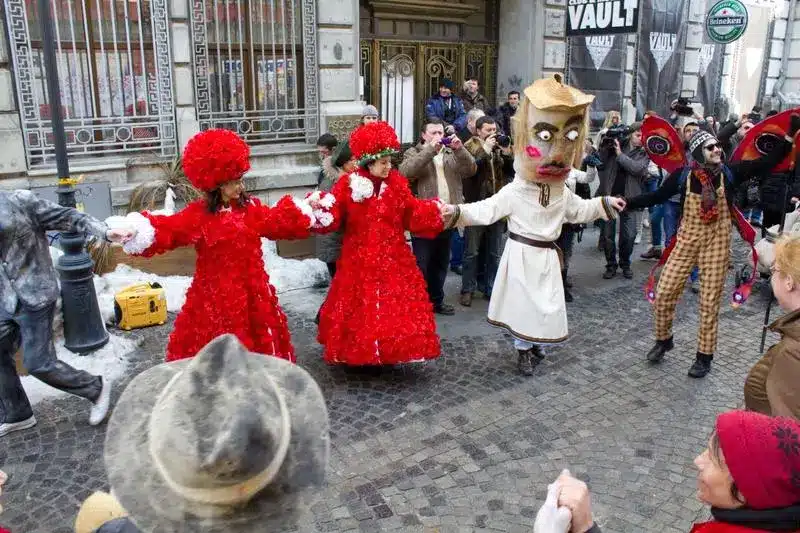
Young people gather outdoors, pick flowers and herbs, sing, and dance, while birds are said to be betrothed. If a girl is kissed on Dragobete, it is said she will be loved all year. It’s believed that participating in Dragobete festivities will protect you from illness for the entire year. Romanian couples also believe that washing their faces with snow on this day will bring them health and happiness – a chilly but supposedly effective love ritual!
Unlike Valentine’s Day, Dragobete is deeply connected to nature and renewal, reminding couples that love grows best when aligned with the rhythms of the earth.
Saudi Arabia: The Underground Valentine’s Revolution
Until recently, Valentine’s Day was banned in Saudi Arabia. Religious authorities saw it as a Western influence, and public celebration was restricted. In February, red roses and heart-shaped gifts often vanished from store shelves.
But love finds a way. A quiet black market grew around Valentine’s gifts. Red roses sold for astronomical prices. Couples met in secret to trade small tokens of affection. Some florists hid red flowers under other blooms, and gift shops kept heart–shaped items tucked away in back rooms.
In recent years, the ban was lifted and attitudes have started to shift. Many couples still keep it private, choosing handwritten notes, a shared meal at home, a thoughtful gift, or time together away from public view.
That mix of past limits and present change shaped a unique kind of Valentine’s Day. Today, attitudes are gradually changing. Many couples celebrate privately – through handwritten notes, shared meals at home, thoughtful gifts, and personal moments away from public view.
The rebellious romantic spirit it fostered created some of the most passionate and secretive Valentine’s celebrations imaginable. Sometimes, prohibition truly does make the heart grow fonder. Sometimes the most meaningful moments happen behind closed doors, built on sincerity and respect.
Scotland: Single Women and Magical Herbs
In Scotland, Valentine’s Day used to be more about signs and dreams than big love speeches. Single women placed bay leaves on their pillows, hoping to dream of their future husband. Some took it further and pinned five bay leaves to the pillow, four at the corners and one in the center, while reciting love incantations.
Other women woke before dawn and looked out the window. They believed the first man they saw would be the one they’d marry within the year. This tradition led to some rather awkward encounters with surprised milkmen and postmen!
Scotland once held some of the most romantic Valentine’s traditions in Europe. Historically, Valentine’s Day involved “love lotteries”, where people drew names to pick a partner romantic for the year. That custom has mostly faded, but the love of words stuck. Handwritten notes and poems still matter, often shaped by writers like Robert Burns. These days, romance might look like a quiet trip to the countryside, a castle visit, or a warm dinner by the fire. Scottish love can feel raw, poetic, and full of heart, much like the land itself.
China: Qixi – The Night of Sevens

Western Valentine’s Day is popular in China, but Qixi Festival is the country’s traditional Valentine’s Day. It falls on the 7th day of the 7th lunar month and centers on one of China’s best–loved love stories.
Qixi comes from the legend of the Cowherd and the Weaver Girl, two lovers kept apart by the Milky Way.They can meet only once a year, when magpies form a bridge across the sky. That mix of romance and distance gives the holiday its calm, celestial feel.
In the past, young women marked Qixi by praying for wisdom, skill, and a good marriage. Today, it looks more like a modern date night. Couples swap gifts, plan romantic outings, and post heartfelt messages.
At the same time, Modern Chinese couples blend ancient traditions with cutting-edge technology. You might see coordinated flash mobs in public squares, big light displays on tall buildings, and social media posts that rally friends into large surprise gestures. The old myth and the new style sit side by side, and that contrast makes Qixi feel special.
Qixi stays more poetic, more celestial than purely commercial. It reminds people that love can take patience, sacrifice, and faith in reunion.
The Global Evolution of Love
What makes these diverse Valentine’s Day traditions so fascinating is how they reflect each culture’s values, history, and social structures while addressing the universal human need for connection and romance. From Wales’ emphasis on craftsmanship to Korea’s economic complexity, from Romania’s connection to nature to Japan’s social hierarchies – each tradition offers insights into what love means in different contexts.
Why These Traditions Matter
Across cultures, Valentine’s Day traditions show a simple truth: love looks different in different places.
Love can be loud or quiet. It can be public or private. It can be romantic, platonic, spiritual, or shared by a whole community. From Saudi Arabia’s subtle affection to Romania’s nature – blessed romance, from China’s celestial love story to Scotland’s poetic passion, each custom offers its own take on what love means.
Even with all our connections today, these differences still matter. When you learn how other places celebrate love, it gets easier to see what we share and what makes each culture special. Romance doesn’t have to follow one script. It can be carved in wood, celebrated with friends, tied to a local festival, or shown through community events.
Across continents, these traditions also share a powerful core theme: love is universal, but culturally expressive.
Love loves ritual. Whether it is chocolates in Ghana or carved spoons in Wales, small traditions help people show care in a way that feels right at home.
Love isn’t one-dimensional. Finland’s friendship-focused celebrations and the Philippines’ mass weddings remind us that love can include friends, family, and the wider community, not just couples.
Love is creative. Poems, homemade gifts, and heart-shaped crafts often matter more than price tags. Effort and thought say a lot.
There’s also plenty we can bring into our own lives. You might borrow the Welsh focus on handmade keepsakes, the Mexican habit of including friendship, the Brazilian link between love and shared celebration, or the Chinese mix of old stories with modern life.
In the end, Valentine’s Day around the world points to the same core idea: love is universal, but people express it through culture.
How to Celebrate Valentine’s Day Like the World
If you want to make Valentine’s Day extra memorable, mix a few love traditions from around the world.
Start on Feb 14 with a Japanese-style heartfelt card. Then plan a small White Day gift for March 14. You can also host an Argentine Week of Sweetness in the days leading up to Feb 14, with shared treats and little notes.
Add a Welsh touch with love spoons. If woodworking isn’t your thing, make a simple piece of digital art instead. Keep the Finnish Ystävänpäivä spirit too, and include friends. A group dinner, a coffee meetup, or a few thoughtful messages all fit.
Bring in Ghanaian National Chocolate Day for a proud cocoa moment. Pick a chocolate you both love, then make it part of the night.
If you want a few more ideas, try these:
- Write anonymous love poetry like the Danes.
- Celebrate friendship the Finnish way.
- Exchange handmade gifts inspired by Wales.
- Add chocolate pride à la Ghana.
- Include patience and devotion like China’s Qixi lovers.
Mixing traditions like this keeps things fresh and personal. It also shows how many ways people share care and love around the world. Love is the universal language, but it speaks with countless beautiful accents. This Valentine’s Day, let’s celebrate not just our own traditions, but the magnificent tapestry of romance woven by cultures around the world.
Which of these traditions surprised you the most? Have you encountered unique romantic customs in your travels? Share your own cross – cultural love stories and let’s celebrate the beautiful diversity of human romance!